

Embarking on the journey of protecting your basement from the relentless grip of moisture and leaks can seem overwhelming. However understanding the various waterproofing methods can make the difference between a damp, health-hazardous space and a dry, comfortable living area.
From the application of sealants within your interior walls to the construction of barriers against external water infiltration, each approach offers distinct benefits and challenges.
Determining the right strategy for your home involves weighing factors like cost, the construction of your dwelling, and the surrounding landscape.
Keep reading to delve into the pivotal details of basement waterproofing and discover the approach that best suits your needs.
Understanding the Basics of Basement Waterproofing
Transitioning into the realm of basement health, identifying signs of moisture is pivotal to maintaining a dry and structurally sound foundation.
Homeowners should be vigilant in recognizing the subtleties that distinguish seepage from condensation, as each presents its own set of challenges in a basement environment.
Seepage, often indicated by water infiltrating through walls or floors, can lead to significant damage if left unaddressed.
Condensation, on the other hand, may present itself through a less obvious dampness, contributing to increased humidity levels and, potentially, mold growth.
Acknowledging and addressing such nuances with an accurate diagnosis is the cornerstone of effective basement waterproofing and cannot be overstated in its importance.
Identifying Signs of Basement Moisture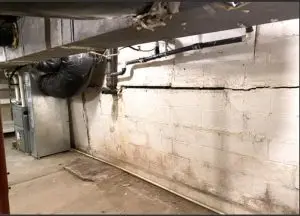

When it comes to unearthing the subtle indicators of moisture in a basement, the signs might be as blatant as a pool of water on the floor after a heavy rain or as insidious as a faint odor of mildew in the air. Regardless of their visibility, these symptoms point toward the possible need for a waterproofing solution, underscoring the urgency with which homeowners should act to protect the integrity of their living space and foundation.
Wall discoloration and efflorescence—a salty, powdery residue—can betray the presence of water infiltrating the concrete block, often suggesting a breach that invites moisture into the basement. Watchfulness should extend to checking for damp spots on carpet or warped wood, which signal water’s stealthy encroach upon the domestic sphere, prompting measures such as interior basement waterproofing or foundation repair.
Differentiating Between Seepage and Condensation
Distinguishing between seepage and condensation is critical in devising an accurate waterproofing strategy for a basement. Seepage is the process where water percolates through walls or the floor, often traced back to issues with the exterior waterproofing or the surrounding soil’s drainage capacity. Condensation, by contrast, forms when warm, moist air contacts cooler basement surfaces, leading to water droplets accumulating on walls, pipes, and other objects.
Homeowners need to identify whether their basement moisture problems stem from seepage or condensation to select the appropriate waterproofing solutions. It involves a careful inspection for leak indicators such as patches of efflorescence or visible water tracks, which typically point to seepage, as opposed to persistent damp spots suggestive of condensation issues.
The Importance of Correct Diagnosis Before Waterproofing
A precise identification of the water issue at hand is essential before embarking on any waterproofing journey. Without a correct diagnosis, homeowners risk applying solutions that are ineffectual or, worse, exacerbate existing problems, leading to wasted investment and potentially more extensive damage.
It’s not merely a matter of deciding which tools or materials to use, such as concrete sealer or epoxy injections; it’s about understanding the architecture of moisture—how it moves, where it comes from, and what it affects—and tailoring waterproofing strategies accordingly. Professionals in foundation repair basement services rely heavily on detailed inspections to ensure the correct approach is employed, which safeguards homeowners against future water-related issues and secures the value of their property.
The Interior Waterproofing Method: An Inside Look
As we traverse the complexities of basement waterproofing, the interior method beckons with its own set of strategic options, each designed for specific challenges. Navigating this terrain, one might consider concrete waterproofing coatings, a robust barrier against moisture that binds with masonry to seal off water ingress.
Equally pivotal are silicate-based concrete sealers, penetrating the surface to fortify and densify, functioning as an invisible shield.
On another front, waterproofing paint, formulated often as an acrylic solution, adds a layer of defense that not only prettifies the space but also resists the ever-persistent encroachment of dampness. In tandem, interior water drainage systems act as a bulwark beneath the surface, channeling unwelcome water away effectively. Grappling with these methods requires a discerning eye for detail to ensure that the chosen solution aligns with the unique conditions each basement presents.
Concrete Waterproofing Coatings
Delving into the realm of concrete waterproofing coatings, homeowners find a steadfast ally against the ravages of basement moisture. These coatings are specifically designed to adhere to concrete and masonry surfaces, creating a durable and impenetrable moisture barrier.
Utilizing advanced formulations, these coatings not only prevent water infiltration but also stand up to the harsh environmental factors of a subterranean space, providing a lasting solution to keep basements dry and protected.
Silicate-Based Concrete Sealers
Silicate-based concrete sealers infiltrate deeply into the pores of concrete blocks, reacting chemically to create a hardened surface. This transformation not only solidifies the concrete, but also significantly reduces its porosity, effectively impeding the advance of moisture through capillary action.
These sealers, once cured, endow the concrete with an increased resistance to water, without altering the outward appearance of the basement’s concrete surfaces. They serve as an invisible yet powerful barrier, contributing to the long-term preservation of the basement’s structural integrity.
Waterproofing Paint as an Acrylic Formula
As homeowners explore their options for maintaining a dry basement, waterproofing paint emerges as a popular choice, particularly formulations based on acrylic. This type of paint stands out for its easy application and ability to create a seamless barrier that keeps moisture at bay.
Applied directly to the basement’s concrete or masonry walls, acrylic waterproofing paint bonds to the surface, curing to form a water-resistant coating. Its non-toxic nature and quick drying time make it an efficient and health-conscious option for interior basement waterproofing projects.
Using Interior Water Drainage Systems
Interior water drainage systems are ingeniously designed to intercept and redirect water before it becomes a nuisance within a basement. These systems typically involve the installation of a perimeter trench that channels collected water to a strategically located sump pump, which then expels it away from the foundation.
By addressing water at the most likely entry points, these drainage systems play a crucial role in preventing basement flooding and the myriad issues that come with unwanted moisture. They provide peace of mind for homeowners, ensuring that even during heavy rains, their basements remain resolutely dry and their investments secure.
Exterior Basement Waterproofing: Blocking Water Outside
Turning our attention outward, exterior basement waterproofing stands as a formidable line of defense against water menacing from the outside. Tackling this approach centers on the meticulous process of excavating around a home’s foundation to install dedicated waterproofing measures.
This task often uncovers the opportunity to apply specialized membrane and sealant solutions directly to external walls, forming a robust and continuous barrier against moisture penetration. Equally crucial is the implementation of proper drainage systems, which are meticulously engineered to redirect water away from the foundation, thus preserving the home’s structural integrity and preventing any compromise to its foundation.
Such comprehensive exterior methods are vital in securing a dry and stable basement environment, safeguarding homeowners’ peace of mind and investment.
The Process of Excavating and Waterproofing Exteriors
Embarking on exterior basement waterproofing typically begins with the careful excavation of the soil surrounding the foundation. This critical step not only exposes the foundation walls for direct treatment but also allows for the detection and repair of cracks or other potential points of water entry, laying the groundwork for a comprehensive waterproofing strategy.
Following the excavation, professionals apply a combination of waterproof membranes and durable sealants to the foundation walls. These materials unite to form an impermeable barrier, protecting against groundwater and soil moisture that could otherwise lead to basement leakage and long-term damage to the structure of the home.
Membrane and Sealant Solutions for External Walls
Membrane solutions for external walls form a vital component of the exterior waterproofing process. Once the foundation walls are exposed, a waterproofing membrane is directly adhered to ensure a steadfast barrier against moisture infiltration from the outside environment.
In addition to membrane installation, professionals utilize high-quality sealants to fill any voids and join the membrane edges, creating a comprehensive moisture shield that spans the entire exposed foundation perimeter. These sealant applications are tailored to form a seamless barrier, effectively neutralizing the potential for water entry into the basement.
Importance of Proper Drainage Systems Around Foundations
Proper drainage systems around foundations act as unsung heroes, often overlooked but critical to the health and longevity of a home. Installed strategically around the foundation’s perimeter, these systems prevent water from pooling and exerting pressure against basement walls, a common precursor to water infiltration and foundation damage. By channeling moisture away effectively, they uphold the stability of the home and maintain a dry basement environment.
Advancing beyond standard gutter maintenance, the correct implementation of a drainage system, such as a French drain, requires precision to navigate the natural slope and water table levels unique to each property. These systems not only mitigate the risk of basement flooding but also contribute to preserving the home’s overall value and structural integrity by providing a reliable pathway for groundwater to be diverted away from the foundation.
The Integral Waterproofing Approach for New Construction
Bridging the gap between protection and construction, the integral waterproofing approach embeds itself into the blueprint of new builds, offering a preemptive strike against moisture issues. This method weaves a layer of moisture defense into the concrete mix or applies it during the curing process, creating a barrier that is unified with the foundation’s very structure.
With integral waterproofing, basements gain a formidable ally in moisture mitigation from the start, providing long-term resilience and minimizing the need for future interventions. Embracing this technique not only serves to enhance the durability of the basement space but also optimizes construction workflows, presenting a forward-thinking investment in the home’s foundational health.
How Integral Systems Are Incorporated During Construction
During the construction process, integral systems are seamlessly integrated by mixing a waterproofing compound directly with the concrete. This concoction ensures that the waterproofing elements are evenly distributed throughout the concrete, becoming an intrinsic part of the foundation from the very beginning.
Beyond merely blending additives, contractors apply these tailored waterproofing solutions at the time of concrete pouring, ensuring that the chemical bonding occurs as the concrete cures. This proactive strategy embeds a water-resistant layer deep within the structure, preventing water ingress right from the foundation’s inception.
Advantages of Using Integral Waterproofing in Basements
Integral waterproofing offers an enduring solution, resisting the harsh effects of water pressure and environmental conditions from the outset of a structure’s life. By merging the waterproofing component with the concrete itself, the need for secondary protective measures later on is significantly mitigated, streamlining the longevity of the basement’s resistance to moisture.
Employing integral waterproofing during construction bolsters the basement’s defense against the infiltration of moisture through micro-cracks and fissures which can evolve over time. This preemptive tactic greatly reduces potential maintenance concerns, enhancing the home’s overall value and offering the homeowners a sturdier, more reliable foundation.
Comparing Costs and Benefits of Each Waterproofing Approach
As we delve into the world of basement waterproofing, the challenge lies in finding the most cost-effective and durable approach to safeguard a home’s lower level.
Faced with options like the interior method, which offers easier access and potentially lower upfront costs, against the more intensive, but comprehensive exterior waterproofing, homeowners find themselves weighing the immediate expenditures against long-term value. Meanwhile, the integral method emerges as a preemptive strategy, embedding protection into the fabric of the foundation itself during construction.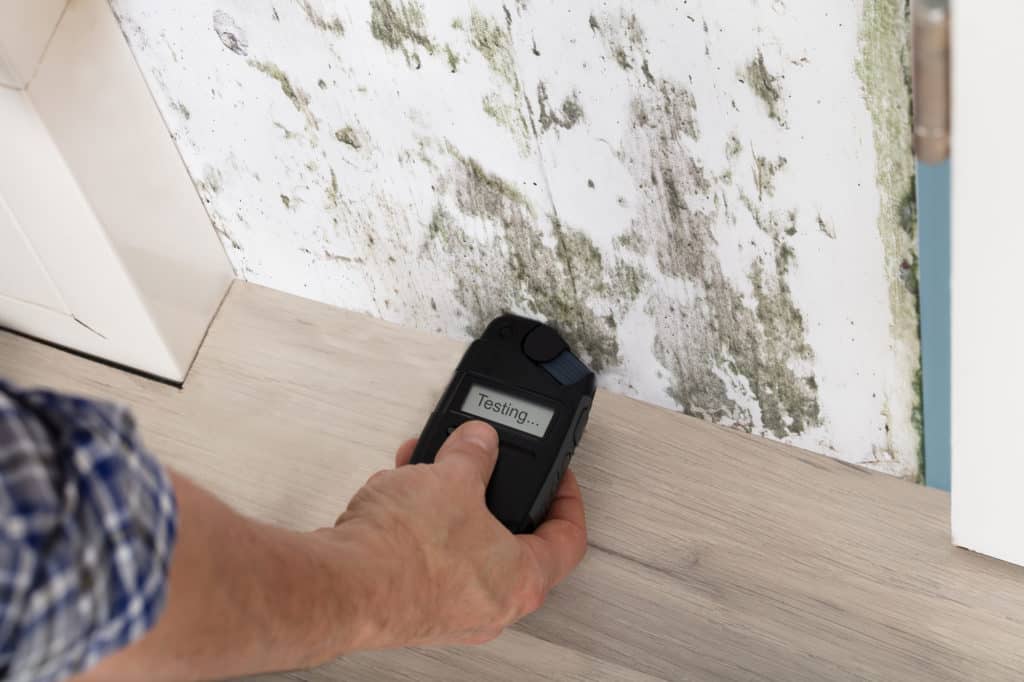
This approach, while proactively securing the basement from moisture, calls for a discerning analysis of its long-term cost efficiency and benefits. Unpacking these methods unveils a rich tapestry of facts and ps that guide homeowners in making the wisest investment for their domicile’s enduring health and stability.
Interior vs. Exterior Waterproofing: A Cost Analysis
Opting for interior basement waterproofing can be appealing due to its relatively lower upfront costs and lesser disruption during installation. Homeowners often select this method because it allows them to tackle moisture problems from inside their homes without excavating the exterior, which can be a more budget-friendly fix in the short term.
Exterior waterproofing, while typically more costly, offers a more permanent solution by addressing the issue at its source—the outside of the basement walls. Despite its higher initial investment, this approach minimizes the risk of future water damage and associated repairs, potentially providing greater long-term savings and added value to the property.
Long-Term Benefits of Choosing the Integral Method
Integral waterproofing stands out for its durability and comprehensive nature, effectively minimizing the vulnerability of basements to water penetration over time. By integrating the waterproofing process with the concrete’s initial set, it reduces the likelihood of future breaches and maintenance needs, making it a favorable option for new constructions.
The inherent characteristics of an integral method create a monolithic bond with the concrete, eliminating seams or weak points that external conditions might exploit. This seamless integration translates into a potent defense against moisture ingress, ensuring the basement’s longevity and preserving the home’s structural soundness for years to come.
Contact the Professionals at Aquaguard Waterproofing Today! (301) 595-9670

Having started in 1990, we boast expert staff members with collective experience in the industry going strong for over 50 years. We promise our clients superior workmanship and quality in basement waterproofing and foundation repair at budget-friendly prices, capped by a fantastic client experience to ensure your ultimate satisfaction.
We are a local and family-owned business committed to providing top-notch basement waterproofing service and workmanship. We are also actively involved in several non-profit projects for the betterment of our community. In 2025 we celebrated 35 years.