
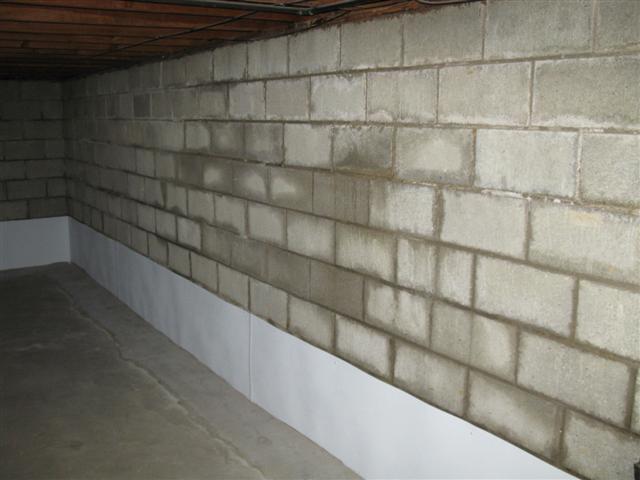
Foundation issues can send a shiver down any homeowner’s spine, conjuring visions of sky-high repair bills and complicated construction work. Yet, the journey to a stable home foundation need not be fraught with anxiety and uncertainty.
From the use of steel piers to combat unstable soil to the precision of polyurethane foam jacking for raising concrete slabs, modern foundation repair techniques offer effective and diverse solutions to suit various challenges.
With innovations constantly emerging in the industry, it’s essential to stay informed about the most reliable and cost-effective methods being used by professionals. Keep reading to delve deeper into a homeowner’s guide to the latest foundation repair techniques and discover which method might be the right fix for your home.
Exploring Steel Piers for Lasting Foundation Repair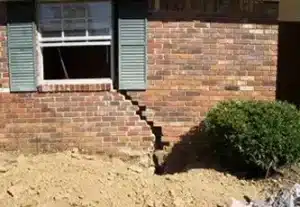

Delving into effective foundation repair solutions, the efficacy of steel piers has garnered significant attention from foundation repair specialists.
These robust components serve as a stalwart ally against the challenges posed by unstable soil conditions.
At the core of their function lies an intricate installation process, necessitating precision and expertise to ensure they anchor securely into the bedrock.
The rewards of selecting steel piers are manifold, not least the durability and strength they afford to a compromised foundation.
Key to their success is recognizing when their attributes are most advantageous, which involves a careful consideration of the surrounding environmental conditions and the specific structural demands of the property in question.
By examining these elements, homeowners and contractors pave the way for a tailored solution that addresses the nuances of each unique situation.
Understanding the Installation Process
Grasping the install methodology of steel piers demands a blend of keen insight and skilled execution. A foundation repair contractor hoists these sturdy piers into position, wherein they must penetrate deep past unstable earth to the stable bedrock beneath. It’s this descent and anchorage that provides the unwavering support necessary for long-term structural integrity.
Engaging a structural engineer often becomes crucial during this phase, ensuring that each pier’s placement achieves optimal load distribution across the foundation. This precision avoids the risk of further damage and aligns with the overarching goal of restoring equilibrium to the property’s foundation, effectively shielding it against future soil shifts and moisture variations.
Benefits of Using Steel Piers
The utilization of steel piers in foundation repair is synonymous with resilience and longevity. When correctly installed, they offer an unwavering support system that can outlast many other repair methods, ensuring the structural soundness of a building for decades to come.
Another advantage is the minimally invasive nature of steel pier installation, preserving the landscape and providing a quicker path to normalcy post-repair. Residents and businesses alike value this expedient recovery, allowing them to resume their daily activities with minimal disruption.
Identifying Suitable Conditions for Steel Piers
Determining whether steel piers are the ideal choice for foundation repair starts with examining the groundwater levels and soil composition of the property. A foundation specialist near me can assess these site-specific factors, ensuring that this robust solution is matched with environments where the soil’s instability or potential for moisture-induced erosion presents a threat to the foundation’s integrity.
Professionals also consider the structural requirements of the building, with heavy commercial structures often benefiting most from the high load-bearing capacity of steel piers. These reliable supports provide a firm grip into the bedrock, delivering unwavering stability even to large-scale complexes requiring commercial foundation repair.
Helical Piers: A Versatile Foundation Repair Solution
Moving beyond the realm of traditional methods, helical piers offer a dynamic foundation repair technique that adapts to a multitude of ground conditions.
Their design features helical flights, akin to a screw, that provide secure anchorage as they are driven into the soil.
This innovative approach to underpinning not only stabilizes existing structures but also assists with new construction in challenging environments.
The advantages of helical pier systems lie in their versatility and efficient load-bearing capabilities, making them suitable for a diverse array of soil types.
From residential properties troubled by shifting clay to commercial buildings facing sandy soils, helical piers present a customizable solution to ensure long-term foundation stability.
How Helical Piers Work
Helical piers work by mechanically advancing into the soil like a giant screw, utilizing a hydraulic system to penetrate through layers of earth with relative ease. Once they reach the required depth, typically verified by measuring torque resistance, these piers anchor firmly against the underlying stable strata.
The installation process is carefully monitored by foundation repair experts to ensure that each pier is positioned at the correct depth and angle, establishing a secure base that can bear the weight of the structure above. By transferring the load of the building to the more stable soil or bedrock, helical piers provide an effective counter to the instability caused by shifting soils.
Advantages of Helical Pier Systems
Helical pier systems are lauded for their swift installation, which results in less operational downtime for property owners. The innovative design reduces the need for extensive excavation, allowing for a less intrusive process that maintains the existing landscape’s integrity while still securing a solid foundation.
Moreover, these piers come with the added benefit of immediate load transfer, offering stability from the moment of installation. This is particularly advantageous in time-sensitive projects, where quick stabilization can prevent further damage and reduce the overall cost of repairs.
Applications in Various Soil Types
Helical piers shine in their adaptability to various soil conditions, swiftly becoming a go-to choice for unpredictable terrains. They can be effectively utilized in areas with soil that is prone to expansion and contraction, as their design allows them to maintain sturdy connections deep within more stable layers of the earth. This attribute makes them a reliable option for regions experiencing diverse climate conditions that significantly impact soil behavior.
In sandy or loose soils, where traditional foundation methods struggle to gain traction, helical piers provide an immediate solution. Their unique spiraled design facilitates secure embedding without the need for weighty machinery, making them an ideal choice for sites that are difficult to access or have environmentally sensitive landscapes.
Concrete Pier Foundation Repair Explained
Transitioning from the world of steel and helical piers, we turn our attention to concrete pier foundation repair, a time-tested method favored across countless renovations and construction projects.
Diving into this substantial undertaking, the procedure for installing concrete piers begins with excavating strategic points around the foundation, followed by the placement of these steadfast pillars to underpin and reinforce the existing structure.
While the benefits range from long-term stability to cost-effectiveness, property owners must weigh these against potential drawbacks such as the extensive labor and time required for installation.
When the decision looms about which path to take for foundation repair, the choice of concrete piers emerges as a pertinent option for many, especially in instances where the soil conditions and property needs align with the strengths of this venerable method.
The Procedure for Installing Concrete Piers
The installation of concrete piers begins with digging deep shafts at strategic locations around the weakened foundation. Each shaft is meticulously drilled until it reaches the prescribed depth, where stable soil or bedrock can securely bear the weight of the structure.
Once these shafts are prepared, they’re filled with concrete to form the piers. This process involves the careful pouring of high-quality concrete, which, after curing, provides a robust and enduring support system for the foundation, effectively bridging any gaps between the structure and stable ground.
Pros and Cons of Concrete Piering
The solid advantages of concrete pier foundation repair lie in its ability to provide a long-lasting solution. Since concrete is known for its durable nature, these piers can securely support a structure for years, potentially saving homeowners from recurrent repair costs.
On the flip side, the disadvantageous aspects include the inconvenience of a lengthy installation process and the significant disruption to the surrounding property. Furthermore, because of the extensive excavation required, there is the possibility of damage to the landscaping, which might entail additional restoration expenses.
When to Choose Concrete Piers for Repair
Selecting concrete piers for foundation repair is advisable when the property rests on particularly unstable soil where other methods may falter. This scenario often involves soil with significant depth variations or a propensity for dramatic shifts, conditions under which concrete piers, with their robust structure after curing, can provide unmatched stability.
Concrete piers emerge as a rational choice for those seeking a permanent fix to recurring foundation issues, particularly when budget and long-term value are of paramount concern. They are preferable in situations where a substantial repair is justified by the scale of the problem or when the integrity of the entire structure depends on the resolution of profound foundation weaknesses.
Innovative Foundation Repair With Polyurethane Foam Jacking
In the dynamic field of foundation repair, polyurethane foam jacking has emerged as a cutting-edge method that has revolutionized the approach to addressing subsidence and uneven surfaces.
This technique employs the strategic injection of an expandable foam material beneath the existing foundation, which solidifies and expands, leading to precise lifting and stabilization.
Its rise in popularity beckons a comparison to more traditional methods, as it often provides a quicker, less invasive, and more cost-effective solution.
With a spotlight on versatility, particularly suitable for lightweight structures and minor adjustments, the forthcoming discussion delves into the mechanisms of foam jacking, evaluates its advantages over conventional practices, and identifies the scenarios where its utilization yields optimal results.
The Mechanism Behind Foam Jacking
Polyurethane foam jacking operates through an ingenious application where a polymer solution is injected into small holes drilled into the foundation. Once beneath the surface, this fluid reacts rapidly, expanding into a robust foam that gently lifts the settled concrete to its original position.
This lifting process is meticulously calibrated, as the foam’s expansion is controlled by the expert administering it, ensuring precision in elevation adjustments. The usefulness of this method shines in its ability to correct uneven foundations and slabs without the need for extensive excavation or disruption to the property.
Comparing Foam Jacking to Traditional Methods
Polyurethane foam jacking presents itself as a progressive alternative to the labor-intensive practices such as traditional concrete slab repair. Unlike the older methods which commonly disrupt landscapes and require significant downtime, foam jacking offers a rapid and less intrusive process, reducing the impact on property use.
In the arena of cost and time efficiency, foam jacking eclipses traditional techniques by enabling a quicker return to structure functionality with minimal disruption. Its tailored application targets areas of concern with remarkable precision, sidestepping the heavy machinery and extensive excavation typical of more conventional approaches.
Ideal Situations for Foam Jacking Use
Polyurethane foam jacking is particularly well-suited for correcting minor foundation discrepancies and leveling concrete slabs in residential settings. It’s the method of choice when the affected area requires a swift and pinpointed response, such as in the case of a sunken patio or an uneven sidewalk that poses tripping hazards.
Commercial properties also benefit from foam jacking, especially when business operations cannot afford lengthy downtimes due to extensive repairs. This technique is advantageous for leveling floors in warehouses, retail spaces, and other commercial buildings where a stable and even surface is critical for safety and functionality.
The Effectiveness of Mudjacking in Foundation Repairs
Turning our focus toward the traditional domain of foundation stabilization, mudjacking emerges as a stalwart remedy often considered by repair experts.
This venerable process, also known as “slabjacking,” entails the careful injection of a specialized grout mixture beneath a sunken concrete slab to elevate and realign it to its original position.
The subsequent sections will offer a step-by-step exploration of the mudjacking technique, present a detailed cost-benefit analysis to discern its economic viability, and highlight the limitations and important considerations that should inform a homeowner’s decision before opting for this method of foundation repair.
Step-by-Step Mudjacking Process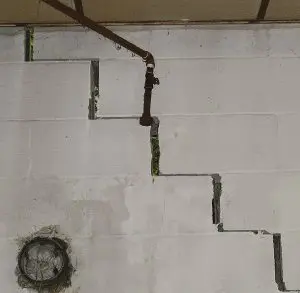
The mudjacking process commences with a thorough evaluation of the impacted area, where a foundation repair contractor identifies strategic points for treatment. Precision-drilled holes are then created in the concrete slab, enabling access to the underlying voids that require filling.
Following the preparation, a specialized grout mixture is pumped into the voids through the holes. The pressure exerted by the grout as it flows beneath the slab forces the concrete to rise, effectively restoring it to its proper level and alignment.
Cost-Benefit Analysis of Mudjacking
Mudjacking presents an economic advantage due to its relatively lower cost when compared with extensive foundation overhaul methods. Property owners find this particularly enticing as it delivers effective elevation corrections without the steep investment typically associated with foundation repairs.
However, while the upfront expenses are less daunting, it’s imperative to consider the longevity of mudjacking. Since it relies on heavier materials, there is a potential for future soil compression and subsequent need for repairs, which could influence the overall cost-benefit equation over time.
Limitations and Considerations
Understanding the limitations of mudjacking is key to setting realistic expectations for a foundation repair project. While suitable for certain scenarios, mudjacking may not be the best fit for foundations that are situated over deeper soils prone to significant shifts or those with extensive voids, where the heavy grout material could potentially exacerbate soil instability over time.
In considering a mudjacking approach, it’s important to consult with a seasoned foundation repair expert who can provide a comprehensive evaluation of the property’s specific conditions. This critical assessment ensures that the chosen method aligns with the physical dynamics at play and that it supports a long-lasting solution tailored to the unique challenges of the site.
Contact the Professionals at Aquaguard Waterproofing Today! (301) 595-9670

Having started in 1990, we boast expert staff members with collective experience in the industry going strong for over 50 years. We promise our clients superior workmanship and quality in basement waterproofing and foundation repair at budget-friendly prices, capped by a fantastic client experience to ensure your ultimate satisfaction.
We are a local and family-owned business committed to providing top-notch basement waterproofing service and workmanship. We are also actively involved in several non-profit projects for the betterment of our community. In 2025 we celebrated 35 years.