
A wet basement is more than an inconvenience. Water around a home’s foundation can contribute to mold growth, damaged finishes, poor indoor air quality and, in some cases, foundation deterioration. The right solution depends on where the water is entering, the condition of the foundation, and the drainage conditions around the property.
Exterior foundation waterproofing is one of the most comprehensive ways to address moisture at its source. Rather than managing water after it reaches the basement, an exterior system is designed to stop or redirect water before it penetrates the foundation wall. However, it is not automatically the right solution for every home. A professional inspection is the best way to determine whether exterior excavation, an interior drainage system, or a combination of methods is appropriate.
What Is Exterior Foundation Waterproofing?
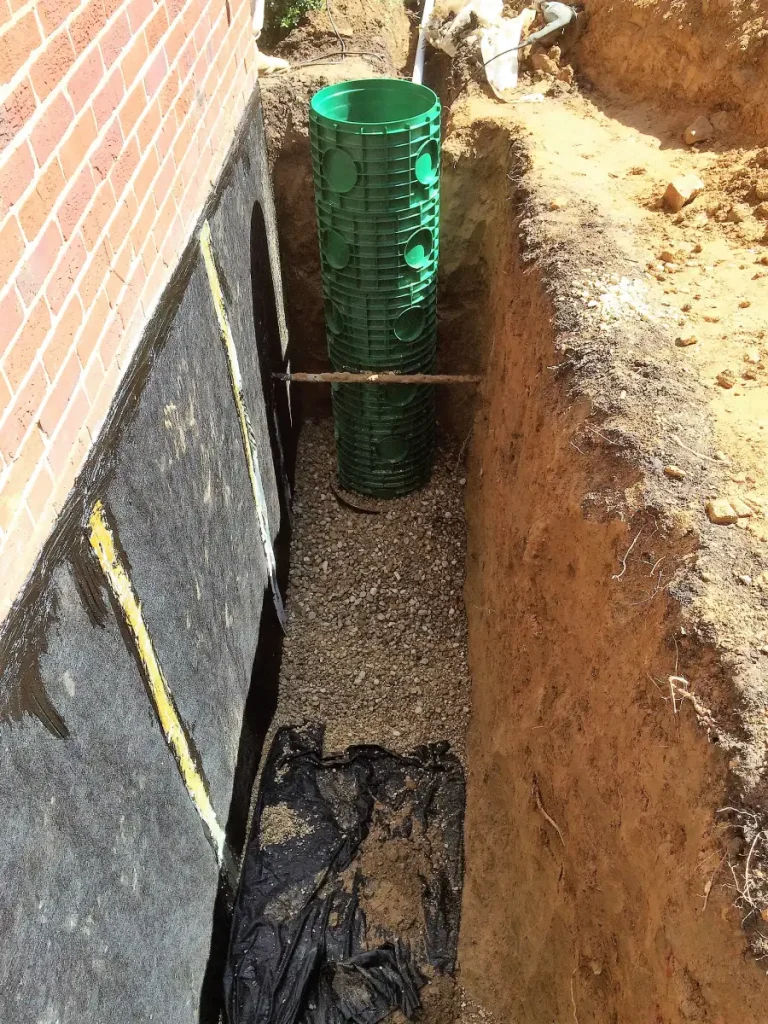
Exterior foundation waterproofing involves excavating the soil beside the foundation so the outside surface of the wall can be inspected, repaired and protected directly. Depending on the property and the recommended system, the work may include:
Excavation to expose the foundation wall, often down to the footing level- Cleaning and preparing the exterior wall
- Repairing visible cracks, joints or deteriorated areas
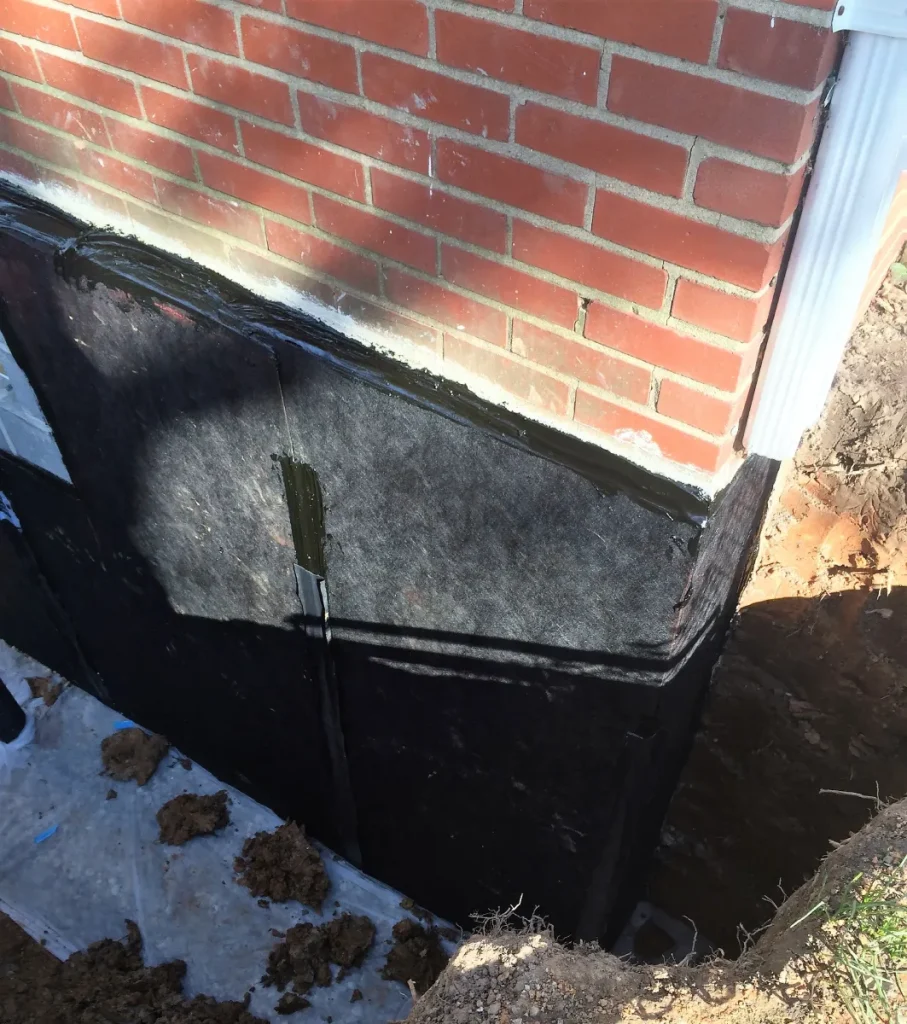
- Installing the waterproofing membrane specified for the project
- Adding drainage board or another protective drainage layer when required
- Inspecting, repairing or improving footing-level drainage when included in the scope
- Backfilling with suitable drainage material
- Restoring proper grading so surface water flows away from the home
Important: The exact materials and steps vary by home. The final published version should use AquaGuard’s approved terminology for its membrane, drainage components, and installation process.
Why Water Reaches Foundation Walls
Soil around a home naturally absorbs rainwater and groundwater. When that moisture accumulates, it can create hydrostatic pressure against the foundation. Water may then find its way through cracks, wall-floor joints, pipe penetrations, porous masonry, or other vulnerable areas.
Interior drainage systems can be highly effective for collecting and redirecting water that reaches the inside of the foundation. Exterior waterproofing takes a different approach by treating the outside surface of the wall and improving drainage before the water reaches the basement interior.
Key Benefits of Exterior Foundation Waterproofing
Addresses moisture at the source
Exterior waterproofing protects the side of the foundation that is directly exposed to wet soil. This can reduce water penetration through cracks, joints and porous masonry before it reaches the basement interior.
Helps protect the foundation wall
Repeated moisture exposure may contribute to cracking, deterioration, efflorescence, freeze-thaw damage and corrosion of embedded reinforcement. Keeping the outside surface of the foundation better protected can help preserve the wall over time.
Improves drainage around the foundation
A complete exterior system does more than apply a membrane. Drainage layers, footing-level drainage and properly graded backfill can help move water away from the foundation and reduce pressure against the wall.
Provides long-term protection
When the correct system is specified and professionally installed, exterior foundation waterproofing can offer durable protection. Its service life depends on the materials used, workmanship, site conditions and ongoing exterior drainage maintenance.
Offers added protection for finished basements
Drywall, flooring, furniture and stored belongings can be costly to replace after a leak. Preventing or reducing moisture intrusion is especially important when the basement is used as a family room, office, gym, bedroom or entertainment space.
May support healthier indoor conditions
A chronically damp basement can contribute to elevated humidity, musty odors and conditions that support mold growth. Reducing foundation moisture can be one part of improving the overall basement environment.
When Is Exterior Excavation Usually Recommended?
Exterior foundation waterproofing may be considered when an inspection identifies conditions such as:
- Persistent leaks or seepage through foundation walls
- Accessible exterior cracks or damaged wall surfaces that require repair
- Block-wall seepage or widespread wall moisture
- High groundwater or poor drainage around the property
- An existing exterior waterproofing system that has deteriorated or failed
- A finished basement that requires a high level of protection
- A situation where treating the outside of the wall is more appropriate than managing water from inside
Exterior excavation may not be the first recommendation when access is severely restricted, the moisture source is unrelated to the foundation wall, or another solution can address the problem effectively with less disruption. An inspection should identify the source of the water before a system is selected.
Exterior vs. Interior Basement Waterproofing
| Consideration | Exterior waterproofing | Interior waterproofing |
|---|---|---|
| Primary approach | Treats the outside surface and drainage around the foundation | Collects and redirects water from inside the basement |
| Excavation | Usually required | Usually not required around the exterior perimeter |
| Disruption | May affect landscaping, patios, walkways or driveways | Work is primarily completed inside the basement |
| Best suited for | Situations where exterior wall treatment or drainage correction is appropriate | Situations where an interior drainage and pumping system is the appropriate solution |
| Decision factor | Foundation condition, access, drainage and water-entry source | Water-entry source, basement layout and drainage requirements |
Neither method is universally better. The right choice is the solution that addresses the diagnosed source of the water, protects the property and fits the conditions of the home.
What Homeowners Can Expect During the Project
1. Inspection and diagnosis
The contractor evaluates where water is entering, the condition of the foundation, exterior access, grading and existing drainage.
2. Project planning
The scope should identify where excavation will occur, which materials will be installed, how hardscaping or landscaping will be handled and what restoration is included.
3. Excavation and wall preparation
The work area is excavated and the exposed foundation is cleaned, inspected and repaired as required.
4. Waterproofing and drainage installation
The specified membrane and drainage components are installed according to the project design.
5. Backfilling and site restoration
The excavated area is backfilled and graded. Restoration details should be confirmed before work begins.
Is Exterior Foundation Waterproofing Worth the Investment?
Exterior excavation generally costs more upfront than less invasive waterproofing methods because it requires labor, equipment, wall preparation and site restoration. Patios, walkways, decks, landscaping or driveways may also affect access and project complexity.
The value should be considered in relation to the problem being solved. When exterior waterproofing is the appropriate recommendation, it may help a homeowner avoid recurring water damage, damaged finishes, mold remediation and more serious foundation repairs. A detailed inspection and written scope are essential before comparing options or pricing.
Questions to Ask Before Approving Exterior Waterproofing
- What is the confirmed source of the water?
- Why is exterior excavation recommended for this home?
- Which foundation areas will be excavated?
- What membrane and drainage products will be installed?
- Are crack repairs and footing-drain work included?
- How will landscaping, walkways or other surfaces be restored?
- What warranty applies to the installed system?
- What maintenance or grading improvements will be required afterward?
A Custom Waterproofing Solution Starts With an Inspection
Exterior foundation waterproofing can be an effective, long-term solution when water is entering your home through the outside of the foundation wall. By repairing exposed foundation walls, installing a professional waterproofing system, and improving exterior drainage, homeowners can address the conditions that contribute to moisture intrusion before they become more serious problems.
Every home is different, and no waterproofing method is right for every situation. The best solution depends on your foundation’s condition, the source of the water intrusion, site drainage, and the property’s layout. A professional inspection is the best way to determine the most effective approach.
If you’re dealing with basement leaks, foundation moisture, or recurring water problems, AquaGuard Waterproofing is here to help. Based in Beltsville, MD, we proudly serve homeowners throughout Maryland, Washington, DC, and Northern Virginia with customized waterproofing solutions.
Schedule your free waterproofing inspection today to identify the source of the problem and receive expert recommendations tailored to your home. Contact our team or visit us at 6820 Distribution Drive, Beltsville, MD 20705, and let us help you protect your foundation for years to come.

Having started in 1990, we boast expert staff members with collective experience in the industry going strong for over 50 years. We promise our clients superior workmanship and quality in basement waterproofing and foundation repair at budget-friendly prices, capped by a fantastic client experience to ensure your ultimate satisfaction.
We are a local and family-owned business committed to providing top-notch basement waterproofing service and workmanship. We are also actively involved in several non-profit projects for the betterment of our community. In 2025 we celebrated 35 years.