

 AquaGuard Waterproofing and Foundation Repair Services
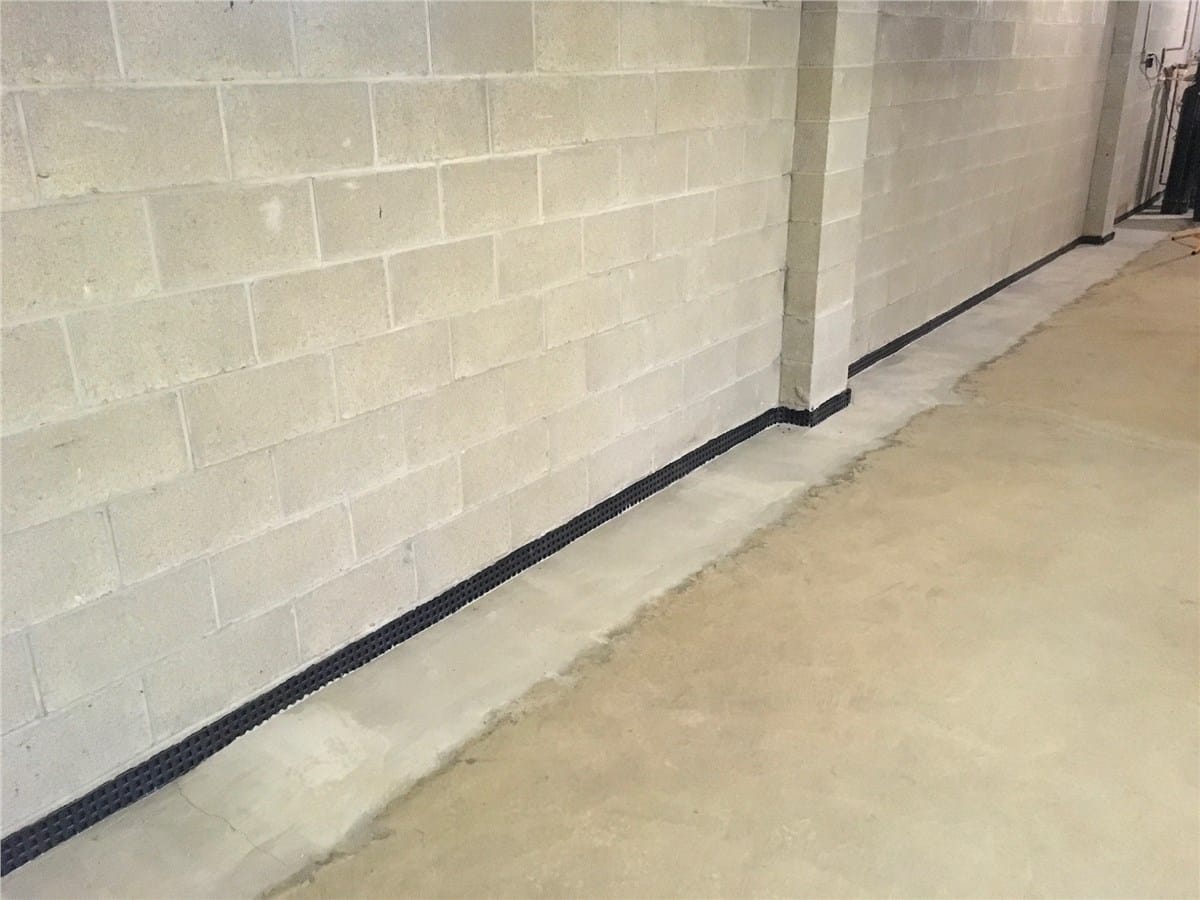
AquaGuard Waterproofing contractors recognize that every home is unique and therefore treat every wet basement problem as such, creating a specific solution for every issue they come across. In order to decipher the root of your watery basement and construct an estimate for your personalized waterproofing service, AquaGuard offers FREE basement inspections and evaluations. We pride ourselves on providing the most cost-effective and noninvasive resolution to your problem. Our team doesn’t want to find the easiest way to finish the job and just put a band-aid on your foundation. Our goal is to do things right and find a permanent solution to keep your basement dry forever. AquaGuard specializes in exterior foundation repair, basement waterproofing, and crawl space waterproofing for existing homes. The first step is carefully excavating around your foundation before installing a plasmatic core membrane around your entire foundation. This high-tech material is dynamic, moving with your building’s foundation and resisting cracking, deterioration, and leaking. Forming a barrier between the water outside your home and your basement, this exterior foundation membrane is a great way to ensure your basement stays dry. If you suspect your original foundation coating is starting to fail or you’re noticing leaking, our foundation repair contractors can help. We offer basement waterproofing for commercial buildings as well as for private residences. From churches and schools to stores and offices, our waterproofing systems can help you avoid further damage, cleanup, and restoration costs and are the premier choice for any type of basement water problem. Our commercial basement waterproofing systems are your answer for a dry, safe commercial property, and they’re not a temporary fix but a long-term solution. Are you consistently finding water leaks in your basement? Are you noticing a damp or stale odor coming from down there? Do you hate rainstorms because you know that means a wet basement? If you answered “Yes” to any of these questions, you NEED to call AquaGuard Waterproofing today. We also offer foundation repair services and can assist you with the installation of egress windows. We service Maryland and its surrounding areas.
Facts About Beltsville, MD
At the September monthly meeting of the GBBA (Greater Beltsville Business Association), Ted Ladd gave a talk about some interesting aspects of the history of Beltsville. Here is the first part of a four-part series that Mr. Ladd has graciously agreed to present in The Beltsville News. Some of what he will include in this series may be expanded more in depth than in his presentation at the GBBA. To introduce you to, and to know more about, Ted Ladd, go to www.jwdc.com/ladd. He has been a longtime, active Beltsville resident since 1962. We hope you will enjoy his information and observations of the town of
At the September monthly meeting of the GBBA (Greater Beltsville Business Association), Ted Ladd gave a talk about some interesting aspects of the history of Beltsville. Here is the first part of a four-part series that Mr. Ladd has graciously agreed to present in The Beltsville News. Some of what he will include in this series may be expanded more in depth than in his presentation at the GBBA. To introduce you to, and to know more about, Ted Ladd, go to www.jwdc.com/ladd. He has been a longtime, active Beltsville resident since 1962. We hope you will enjoy his information and observations of the town of Beltsville, Maryland. Here is Mr. Ladd’s first part of this four-part article series.
Beltsville’s beginnings can be traced to 1649 when Cecil Calvert, the 2nd Baron of Baltimore, also known as Lord Baltimore, granted to planter Richard Snowden 80,000 acres of land that encompassed the area now known as Beltsville. That area is equal to 125 square miles. (Cecil Calvert, married to Anne Arundel, was proprietor of the Maryland Colony from 1632 to 1675. His younger brother Leonard was appointed first governor of the Maryland Colony.)
Snowden divided the land into large plantations. One of them, of note, was named Turkey Flight Plantation, owned by the Beall family, who had arrived from Scotland. The main crop on Turkey Flight Plantation was tobacco. The plantation was inherited by Rezin Beall, born on the plantation in 1723. He served as a lieutenant in the French and Indian War and was commissioned a captain in the Maryland Regulars in January 1776. Some seven months later, July 16th, it was reported that British troops were about to land in St. Mary’s County at Plum Point. Beall arrived there with just 100 men, who concealed themselves along the shore. They counted some 80 British ships offshore, many of them loading longboats with troops. Beall gave the order not to fire until the boats were within 25 yards of shore. When that happened, Beall’s men fired two volleys, and the boats turned around with “great confusion.” All the sailors returned to their ships, and British big guns then started shelling the shore. Beall received a serious wound in the hip area. For leading this successful military action, Beall was promoted to brigadier general. This also earned him the nickname “The Little Man of Iron.”
General Beall served until December 1, 1776. He then returned to Turkey Flight Plantation, where he died on October 14, 1809, at 86. He was buried in the family plot on plantation grounds.
Today, Spicknall’s Farm is located on the site of Turkey Flight Plantation. On November 22, 1969, General Beall’s remains were moved from the family plot, then on Spicknall’s Farm, to St. John’s Cemetery in Beltsville. The gravestone at St. John’s is the original one from Turkey Flight Plantation.
After Rezin Beall’s death, the plantation eventually became the property of Evan and Verlinda Beall Shaw and became known as the Shaw Plantation. Shaw and wife Verlinda lived for 40 years in a home known as the Orme-Shaw House, aka Culver house, located at 11601 Caverly Avenue in Beltsville.
Trueman Belt owned Locust Grove Plantation, located generally on Route 1 across from St. John’s Episcopal Church. In 1835, Belt provided B&O Railroad a right of way through the plantation to allow construction of a rail line from Baltimore to Washington. The railroad established a station at this location and named it Belt Station. From that action, we have become known as Beltsville.
The Muirkirk Iron Works was established in 1847 when Andrew and Elias Ellicott purchased property next to the B&O Railroad tracks in Beltsville from the Snowden family and erected a furnace that was 38 feet high and 8 and ½ feet in diameter at the base. Iron ore was noticed in the area as early as 1800, but it was not mined until 1847.
Pig iron produced at the Muirkirk Iron Works was used in the manufacture of guns, shot, and shell supplied to Union forces during the Civil War. Annual production of the facility was some 7,000 tons of high-grade pig iron with exceptional tensile strength, resistant to breaking under pressure.
In 1860, William E. Coffin, one of Boston’s leading iron manufacturers, purchased the furnace from the Ellicotts and operated the facility until his death, about 1867. His son Charles took over management of the furnace, and it was he who named the facility Muirkirk Furnace, probably because the furnace was modeled from one in Muirkirk, Scotland. The Muirkirk settlement was established about 1870 and consisted of the Coffin family mansion, a post office, a store, and some 30 workers’ residences. Charles later was elected to the Maryland House of Delegates, then to the Maryland Senate, and finally to the US House of Representatives. He died in 1912 in Muirkirk and was buried in St. Johns cemetery.
Upon the death of Charles Coffin, his son Ellery took over management of the Muirkirk Iron Works and ran it until 1920, when it was closed. A Coffin family home still stands at 4931 Powder Mill Road, not far from St. Johns Cemetery. The home was built in 1885 by Dr. Charles Fox, the village doctor for Beltsville until his death in November 1915.
The main route between Baltimore and Washington starting about 1730 was the Post Road, later to become Route 1. In the early days, the 40-mile route was crude, meandered through farmland and forests, but made stagecoach travel possible. The trip between the two cities could take over one day to complete, and this set of circumstances opened the door for a few entrepreneurs to open taverns where travelers could dine and stay overnight.
The first tavern established in Beltsville was Rhodes Tavern, which opened in about 1730 in an area not far from the present location of IKEA. Rhodes Tavern operated until about 1833. President George Washington dined there on 18 December, 1798, on his last trip between the capital, then located in Philadelphia, and Mt. Vernon. This is noted on the historical marker near the site on Route 1 and is also cited in historical records as one of the President’s diary entries for that date, “dined at Rhodes.”
The next tavern to open in the area was the Van Horne Tavern, built by Gabriel Peterson Van Horne in 1783 atop what became known as Van Horne Hill. You may reach this site by taking Edmonston Road northward from the intersection with Powder Mill Road, turning right on Old Baltimore Pike, and taking it to the top of the hill. There you will find an historical marker designating the former location of the Van Horne Tavern. Van Horne built the tavern when he was about 41. Van Horne became well established and built a business of stagecoach lines and taverns from Virginia to Philadelphia and points north. He also operated a post office at the tavern. He communicated by letter with President Washington on several occasions. In one of these letters, he offered a plan to expedite delivery of mail between Philadelphia and Richmond.
Washington was inaugurated in New York City on 30 April, 1789. He traveled from Mt. Vernon to New York City in his personal coach. In May, 1789, plans were made for first lady Martha Washington to travel to New York City, then the U.S. capital, and Van Horne was contacted to make the arrangements. Van Horne noted that the roads on the journey to Philadelphia were poor, so he would drive the stagecoach himself. The trip to New York City took 11 days. The first lady was accompanied by her grandson, 8-year-old George Washington Parke Custis, 10-year-old granddaughter Nellie Custis, and Bob Lewis, son of the President’s sister Betty. They traveled through Beltsville on 18 May, 1789, and stayed that night at the home of Major Thomas Snowden, Montpelier Mansion. The party arrived in New York on 27 May.
On 31 May, the President sent a personal letter to Van Horne expressing the first lady’s gratitude for
“the polite attention you were so good to pay her personally through the most dangerous and difficult part of the journey.”
In 1799, the Maryland legislature authorized commissioners to formally lay out the boundaries of a town to be known as Vansville, which would be a tract of land set aside by Van Horne for this purpose.
President Washington stayed at the Van Horne Tavern on three occasions in 1795. Van Horne passed away in 1815 at the age of 73.
In 1834, the third tavern was constructed near the site of Rhode’s Tavern, which had recently been destroyed by fire. This tavern was built for John Brown, a stagecoach driver and former worker at Rhodes Tavern. At the time, he was 35. This was known as the White House Tavern and also as Brown’s Tavern. It had 24 rooms.
The tavern was adjacent to some 1700 acres of farmland and meadows. Among the usual travelers who stopped at the tavern were drovers accompanied by as many as 500 head of cattle, which would stay in the meadows while the drovers spent the night. Civil War skirmishes occasionally erupted at or near the tavern, sometimes led on the Confederate side by Major George Emack, who lived across the street from St. John’s Episcopal Church, at the time the site of a Union artillery position.
Brown operated the tavern until his death in 1862. It was open for business for another 10 years. In 1940, it was converted to a motel and was destroyed in November, 2001, to make room for new construction.
Brown and family members are buried in a family plot on the grounds of the National Agricultural Library. To view the plot, take Rhode Island Avenue toward the rear entrance to the library. There is an unimproved driveway just west of that entrance that leads to the family plot surrounded by a wrought iron fence.
To view the memorial to Brown’s Tavern and the earlier Rhodes Tavern, go to the intersection of Route 1 and Milestone Way. Parking is available nearby. There you will find historical markers among the artifacts of Brown’s Tavern, plus the original milestone, erected in 1813, indicating the mileage to Washington from that point is 15 miles; to Baltimore, 25 miles.
, Maryland. Here is Mr. Ladd’s first part of this four-part article series.
Beltsville’s beginnings can be traced to 1649 when Cecil Calvert, the 2nd Baron of Baltimore, also known as Lord Baltimore, granted to planter Richard Snowden 80,000 acres of land that encompassed the area now known as Beltsville. That area is equal to 125 square miles. (Cecil Calvert, married to Anne Arundel, was proprietor of the Maryland Colony from 1632 to 1675. His younger brother Leonard was appointed first governor of the Maryland Colony.)
Snowden divided the land into large plantations. One of them, of note, was named Turkey Flight Plantation, owned by the Beall family, who had arrived from Scotland. The main crop on Turkey Flight Plantation was tobacco. The plantation was inherited by Rezin Beall, born on the plantation in 1723. He served as a lieutenant in the French and Indian War and was commissioned a captain in the Maryland Regulars in January 1776. Some seven months later, July 16th, it was reported that British troops were about to land in St. Mary’s County at Plum Point. Beall arrived there with just 100 men, who concealed themselves along the shore. They counted some 80 British ships offshore, many of them loading longboats with troops. Beall gave the order not to fire until the boats were within 25 yards of shore. When that happened, Beall’s men fired two volleys, and the boats turned around with “great confusion.” All the sailors returned to their ships, and British big guns then started shelling the shore. Beall received a serious wound in the hip area. For leading this successful military action, Beall was promoted to brigadier general. This also earned him the nickname “The Little Man of Iron.”
General Beall served until December 1, 1776. He then returned to Turkey Flight Plantation, where he died on October 14, 1809, at 86. He was buried in the family plot on plantation grounds.
Today, Spicknall’s Farm is located on the site of Turkey Flight Plantation. On November 22, 1969, General Beall’s remains were moved from the family plot, then on Spicknall’s Farm, to St. John’s Cemetery in Beltsville. The gravestone at St. John’s is the original one from Turkey Flight Plantation.
After Rezin Beall’s death, the plantation eventually became the property of Evan and Verlinda Beall Shaw and became known as the Shaw Plantation. Shaw and wife Verlinda lived for 40 years in a home known as the Orme-Shaw House, aka Culver house, located at 11601 Caverly Avenue in Beltsville.
Trueman Belt owned Locust Grove Plantation, located generally on Route 1 across from St. John’s Episcopal Church. In 1835, Belt provided B&O Railroad a right of way through the plantation to allow construction of a rail line from Baltimore to Washington. The railroad established a station at this location and named it Belt Station. From that action, we have become known as Beltsville.
The Muirkirk Iron Works was established in 1847 when Andrew and Elias Ellicott purchased property next to the B&O Railroad tracks in Beltsville from the Snowden family and erected a furnace that was 38 feet high and 8 and ½ feet in diameter at the base. Iron ore was noticed in the area as early as 1800, but it was not mined until 1847.
Pig iron produced at the Muirkirk Iron Works was used in the manufacture of guns, shot, and shell supplied to Union forces during the Civil War. Annual production of the facility was some 7,000 tons of high-grade pig iron with exceptional tensile strength, resistant to breaking under pressure.
In 1860, William E. Coffin, one of Boston’s leading iron manufacturers, purchased the furnace from the Ellicotts and operated the facility until his death, about 1867. His son Charles took over management of the furnace, and it was he who named the facility Muirkirk Furnace, probably because the furnace was modeled from one in Muirkirk, Scotland. The Muirkirk settlement was established about 1870 and consisted of the Coffin family mansion, a post office, a store, and some 30 workers’ residences. Charles later was elected to the Maryland House of Delegates, then to the Maryland Senate, and finally to the US House of Representatives. He died in 1912 in Muirkirk and was buried in St. Johns cemetery.
Upon the death of Charles Coffin, his son Ellery took over management of the Muirkirk Iron Works and ran it until 1920, when it was closed. A Coffin family home still stands at 4931 Powder Mill Road, not far from St. Johns Cemetery. The home was built in 1885 by Dr. Charles Fox, the village doctor for Beltsville until his death in November 1915.
The main route between Baltimore and Washington starting about 1730 was the Post Road, later to become Route 1. In the early days, the 40-mile route was crude, meandered through farmland and forests, but made stagecoach travel possible. The trip between the two cities could take over one day to complete, and this set of circumstances opened the door for a few entrepreneurs to open taverns where travelers could dine and stay overnight.
The first tavern established in Beltsville was Rhodes Tavern, which opened in about 1730 in an area not far from the present location of IKEA. Rhodes Tavern operated until about 1833. President George Washington dined there on 18 December, 1798, on his last trip between the capital, then located in Philadelphia, and Mt. Vernon. This is noted on the historical marker near the site on Route 1 and is also cited in historical records as one of the President’s diary entries for that date, “dined at Rhodes.”
The next tavern to open in the area was the Van Horne Tavern, built by Gabriel Peterson Van Horne in 1783 atop what became known as Van Horne Hill. You may reach this site by taking Edmonston Road northward from the intersection with Powder Mill Road, turning right on Old Baltimore Pike, and taking it to the top of the hill. There you will find an historical marker designating the former location of the Van Horne Tavern. Van Horne built the tavern when he was about 41. Van Horne became well established and built a business of stagecoach lines and taverns from Virginia to Philadelphia and points north. He also operated a post office at the tavern. He communicated by letter with President Washington on several occasions. In one of these letters, he offered a plan to expedite delivery of mail between Philadelphia and Richmond.
Washington was inaugurated in New York City on 30 April, 1789. He traveled from Mt. Vernon to New York City in his personal coach. In May, 1789, plans were made for first lady Martha Washington to travel to New York City, then the U.S. capital, and Van Horne was contacted to make the arrangements. Van Horne noted that the roads on the journey to Philadelphia were poor, so he would drive the stagecoach himself. The trip to New York City took 11 days. The first lady was accompanied by her grandson, 8-year-old George Washington Parke Custis, 10-year-old granddaughter Nellie Custis, and Bob Lewis, son of the President’s sister Betty. They traveled through Beltsville on 18 May, 1789, and stayed that night at the home of Major Thomas Snowden, Montpelier Mansion. The party arrived in New York on 27 May.
In 1799, the Maryland legislature authorized commissioners to formally lay out the boundaries of a town to be known as Vansville, which would be a tract of land set aside by Van Horne for this purpose.
President Washington stayed at the Van Horne Tavern on three occasions in 1795. Van Horne passed away in 1815 at the age of 73.
In 1834, the third tavern was constructed near the site of Rhode’s Tavern, which had recently been destroyed by fire. This tavern was built for John Brown, a stagecoach driver and former worker at Rhodes Tavern. At the time, he was 35. This was known as the White House Tavern and also as Brown’s Tavern. It had 24 rooms.
The tavern was adjacent to some 1700 acres of farmland and meadows. Among the usual travelers who stopped at the tavern were drovers accompanied by as many as 500 head of cattle, which would stay in the meadows while the drovers spent the night. Civil War skirmishes occasionally erupted at or near the tavern, sometimes led on the Confederate side by Major George Emack, who lived across the street from St. John’s Episcopal Church, at the time the site of a Union artillery position.
Brown operated the tavern until his death in 1862. It was open for business for another 10 years. In 1940, it was converted to a motel and was destroyed in November, 2001, to make room for new construction.
Brown and family members are buried in a family plot on the grounds of the National Agricultural Library. To view the plot, take Rhode Island Avenue toward the rear entrance to the library. There is an unimproved driveway just west of that entrance that leads to the family plot surrounded by a wrought iron fence.
To view the memorial to Brown’s Tavern and the earlier Rhodes Tavern, go to the intersection of Route 1 and Milestone Way. Parking is available nearby. There you will find historical markers among the artifacts of Brown’s Tavern, plus the original milestone, erected in 1813, indicating the mileage to Washington from that point is 15 miles; to Baltimore, 25 miles.
WHERE TO FIND US:
AquaGuard Waterproofing Corp
6820 Distribution Drive
Beltsville, Maryland 20705
(800) 784-9913
