

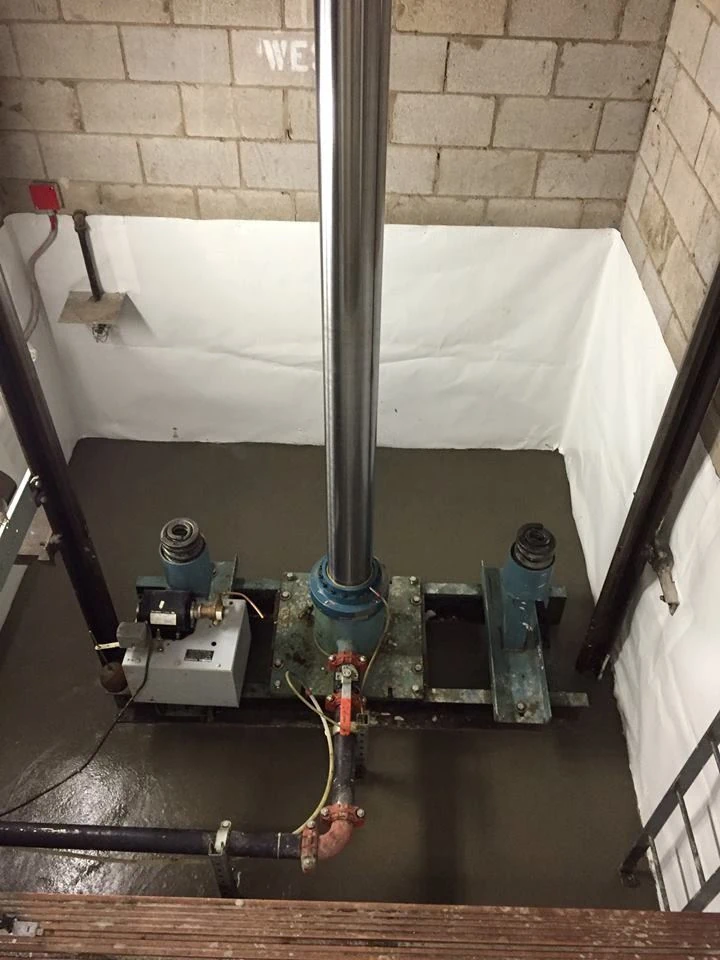
In commercial office buildings, multi-family residential complexes, and historic properties throughout Washington, D.C., elevator pits represent the lowest structural point of the foundation. Situated well below grade, these critical mechanical spaces are highly susceptible to groundwater intrusion. Whether managing a property near the high water tables of the Potomac and Anacostia rivers or maintaining an underground parking garage in Downtown D.C., water entering an elevator shaft poses immediate operational, financial, and regulatory hazards.
Understanding the root causes of water migration in subterranean elevator shafts, strictly adhering to District municipal codes, and deploying specialized, pressure-side waterproofing solutions are essential steps for property managers to protect capital assets and maintain building compliance.
The High Cost of Water Intrusion in Commercial Elevator Pits
Groundwater accumulation in an elevator pit is rarely a cosmetic concern. Because the pit houses vital mechanical components—including buffer springs, steel guide rails, governor tension sheaves, electrical wiring, and hydraulic pistons—standing water triggers a rapid cascade of damage:
- Rapid Mechanical & Structural Corrosion: Continuous exposure to moisture accelerates ru
 st on heavy steel travel cables and structural supports, leading to severe metal pitting and component failure.
- Electrical Hazards & System Shutdowns: Water contact with bottom-terminal limit switches, traveling cables, or electrical junction boxes creates short circuits, blowing main breakers and causing immediate elevator entrapment or service outages.
- Hydraulic Fluid & Environmental Contamination: In hydraulic elevator systems, standing pit water mixes with oil and lubricants, creating toxic sludge that cannot legally be pumped into Washington, D.C.’s municipal sewer system without violating environmental laws.
- Air Quality & Mold Spores: Stagnant water and high relative humidity in elevator shafts act as a chimney (via the “stack effect”), drafting mold spores, bacteria, and musty odors directly into occupied upper-floor tenant spaces.
Washington, D.C. Building Codes and Regulatory Standards
Commercial building owners in the District of Columbia face strict oversight from municipal inspectors, the Department of Buildings (DOB), OSHA, and safety standard codes governed by ASME A17.1 (Safety Code for Elevators and Escalators). Standing water in an elevator shaft is a clear concern during routine municipal inspections and can lead to immediate red-tagging (shutting down the elevator) until remediated.
Key regulatory compliance factors include:
- ASME A17.1 Rule 2.2.2.3: Requires permanent provisions to prevent the accumulation of groundwater in elevator pits. Drains and sump pumps must comply with local plumbing codes and prevent sewer gases, smells, or backup water from entering the hoistway.
- Oil-Sensing Sump Systems: Standard residential sump pumps are strictly prohibited in commercial elevator pits. Under D.C. environmental codes, any automatic discharge pump installed within a hydraulic pit must feature an intelligent oil-sensing switch that pumps water while immediately deactivating if hydraulic fluid is detected, protecting city waterways from oil contamination.
- Firefighter Service Pump Capacity: Elevators designed for Firefighters’ Emergency Operation require high-capacity discharge systems capable of evacuating up to 3,000 gallons per hour per elevator cab to handle active sprinkler run-off during emergencies.
Engineering Solutions: How AquaGuard Waterproofs Elevator Shafts
Waterproofing a commercial elevator pit requires specialized engineering because repairs must be executed entirely from the inside of the shaft (known as negative-side waterproofing). Applying surface paint or basic hydraulic cement fails quickly under active hydrostatic earth pressure.
AquaGuard Waterproofing utilizes a multi-layered, commercial-grade protocol engineered specifically for sub-grade concrete structures:
- Chemical Resin Pressure Injection: High-pressure polyurethane or acrylate resins are injected directly into concrete cold joints, tie-rod holes, and structural foundation cracks. The hydro-active resin reacts with moisture, expanding rapidly into a dense, flexible rubber seal that permanently blocks incoming groundwater pathways.
- Negative-Side Crystalline Slurry Coatings: Crystalline waterproofing compounds are applied to cleaned concrete pit walls and floors. The chemical active ingredients penetrate deep into the concrete’s capillaries, reacting with unhydrated cement particles to grow micro-crystals that permanently seal porous concrete against water pressure.
- Patented FIT PIT System Installation: For active groundwater mitigation, AquaGuard installs the specialized FIT PIT System. Featuring externalized mechanical controls located safely outside the elevator hoistway, this continuous-operation system collects sub-floor water and pumps it out automatically while maintaining full compliance with elevator safety standards.
Frequently Asked Questions (FAQ)
Why is groundwater constantly leaking into our commercial elevator pit?
Elevator pits sit at the deepest point of a building’s foundation, making them vulnerable to hydrostatic pressure. As subterranean groundwater levels rise following heavy Mid-Atlantic rainstorms or seasonal water table shifts, water is forced upward through porous concrete floors, construction cold joints, and cold-pour wall seams.
Can elevator pit waterproofing be performed without taking the building’s elevator out of service permanently?
Yes. Commercial elevator pit waterproofing is completed in planned phases. Working in coordination with your certified elevator service technician (who parks and locks out the elevator cab safely above the work zone), AquaGuard’s technicians perform crack injections, coatings, and pump retrofits directly within the pit space with minimal disruption to building operations.
What happens if oil is found floating in our flooded elevator pit?
If hydraulic oil has mixed with standing groundwater, the liquid cannot be discharged into public storm drains. The contaminated fluid must be professionally vacuumed and disposed of according to EPA guidelines. Once clean, an oil-sensing sump pump system or oil-water separator must be installed to prevent future illicit discharges.

Having started in 1990, we boast expert staff members with collective experience in the industry going strong for over 50 years. We promise our clients superior workmanship and quality in basement waterproofing and foundation repair at budget-friendly prices, capped by a fantastic client experience to ensure your ultimate satisfaction.
We are a local and family-owned business committed to providing top-notch basement waterproofing service and workmanship. We are also actively involved in several non-profit projects for the betterment of our community. In 2025 we celebrated 35 years.