

Walking down your basement stairs and noticing an inward curve or horizontal crack along a foundation wall is one of the most concerning sights a homeowner can encounter. Across Maryland, Washington, D.C., and Northern Virginia, bowing basement walls are a frequent structural issue. Fortunately, if caught early enough, inward wall deflection can be permanently stabilized without the massive disruption of a full foundation replacement.
Understanding the Main Cause: Hydrostatic Pressure and Soil Mechanics
The primary force driving foundation wall failure across the Mid-Atlantic region is hydrostatic pressure. Maryland and Virginia soils contain heavy concentrations of clay—often referred to by geotechnical engineers as expansive soil. Clay acts like a dense sponge: it expands significantly when it absorbs heavy rainfall or snowmelt, pushing outward and exerting thousands of pounds of lateral pressure against subgrade masonry walls.
During dry spells, this soil shrinks away, creating gaps where water pools during the next downpour. Over years of repeated wet-and-dry cycles, the sheer weight of saturated soil exceeds the load-bearing capacity of concrete block or poured concrete walls, causing the wall to bow, bulge, or shear along mortar joints.
4 Key Warning Signs of Wall Deflection
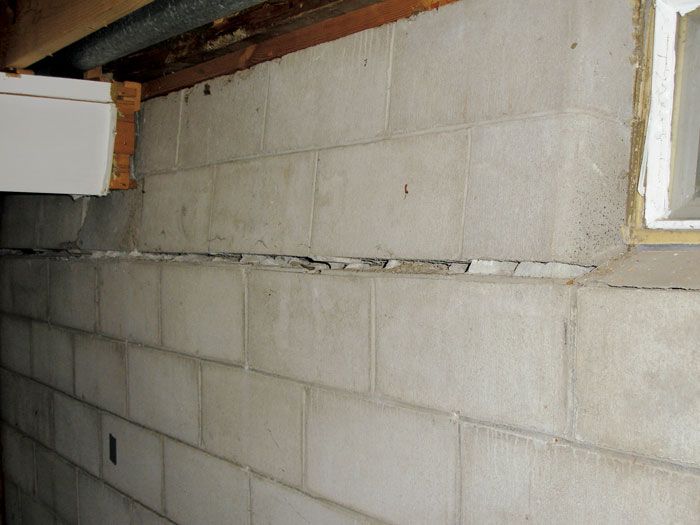
Foundation damage rarely occurs overnight. Homeowners should regularly inspect their lower levels for these warning indicators:
- Horizontal Cracks: Fractures running parallel to the floor—often located midway up the wall where lateral pressure is greatest—are the classic signature of structural deflection.
- Stair-Step Cracking: In cinder block or concrete masonry unit (CMU) foundations, diagonal stair-step cracks through mortar joints indicate uneven pressure and wall shifting.
- Inward Tipping or Bulging: The top of the wall leaning inward away from the wood sill plate, or the center section bulging into the living space.
- Shearing at the Base: The bottom row of concrete blocks sliding inward off the concrete basement floor slab.
Carbon Fiber Straps vs. Anchors vs. Rebuilding
Choosing the right structural repair depends on the severity of the wall’s deflection:
1. Carbon Fiber Reinforcement Straps
For walls with less than 2 inches of inward deflection, carbon fiber straps are the gold standard. Engineered from aerospace-grade carbon weave, these lightweight straps have tensile strength ten times that of structural steel. Applied vertically with high-strength epoxy, they lock the wall matrix into place and prevent any further inward movement.
Key Benefits: Clean installation, zero floor-space loss, completely paintable finish, and no exterior excavation required.
2. Heavy-Duty Steel Wall Anchors & Tiebacks
When inward deflection exceeds 2 inches, carbon fiber alone may not suffice. Heavy-duty steel wall plate anchors are installed by driving steel rods through the foundation wall into stable exterior soil, anchored by heavy steel plates buried in the yard. Over time, these anchors can be tightened to pull the wall back toward plumb.
3. Full Structural Wall Rebuilding
If a foundation wall has suffered total structural shearing or complete mortar deterioration, full excavation and wall reconstruction become necessary. This is a highly complex, expensive procedure reserved for extreme, long-neglected failures.
Repair Costs in Maryland, DC & Virginia
The cost to repair a bowing wall depends on the total linear footage needing reinforcement and the chosen engineering technique:
| Repair Method | Average Cost Range (DMV Region) | Best Suited For |
|---|---|---|
| Carbon Fiber Straps | $4,000 – $8,000 (per wall span) | Deflection under 2 inches; non-excavation preference |
| Steel Wall Anchors | $6,000 – $12,000+ | Moderate to severe deflection; outdoor yard access available |
| Full Wall Rebuilding | $20,000 – $40,000+ | Severe structural failure or wall collapse |
Addressing wall movement early using carbon fiber reinforcement saves homeowners tens of thousands of dollars compared to emergency structural rebuilding.
Frequently Asked Questions
Will a bowing foundation wall continue to move if ignored?
Yes. Hydrostatic pressure in clay soils increases with every major storm cycle. Left unaddressed, minor wall deflection can eventually lead to catastrophic structural failure, water intrusion, and a complete loss of home equity.
Can I sell a house in MD or VA with a bowing basement wall?
Real estate home inspectors flag structural wall movement immediately. In most cases, buyer mortgage lenders will not approve financing until a certified, licensed contractor stabilizes the bowing wall with a transferable warranty.
How long does carbon fiber wall installation take?
Because carbon fiber installation requires no exterior yard excavation, a professional crew can typically complete a residential carbon fiber strap installation in just one day.
Don’t Wait for Foundation Cracks to Worsen
Protect your structural foundation and home equity with local experts who have served MD, DC, and VA since 1990. Contact AquaGuard Waterproofing today to schedule your complimentary, no-obligation engineering assessment.

Having started in 1990, we boast expert staff members with collective experience in the industry going strong for over 50 years. We promise our clients superior workmanship and quality in basement waterproofing and foundation repair at budget-friendly prices, capped by a fantastic client experience to ensure your ultimate satisfaction.
We are a local and family-owned business committed to providing top-notch basement waterproofing service and workmanship. We are also actively involved in several non-profit projects for the betterment of our community. In 2025 we celebrated 35 years.